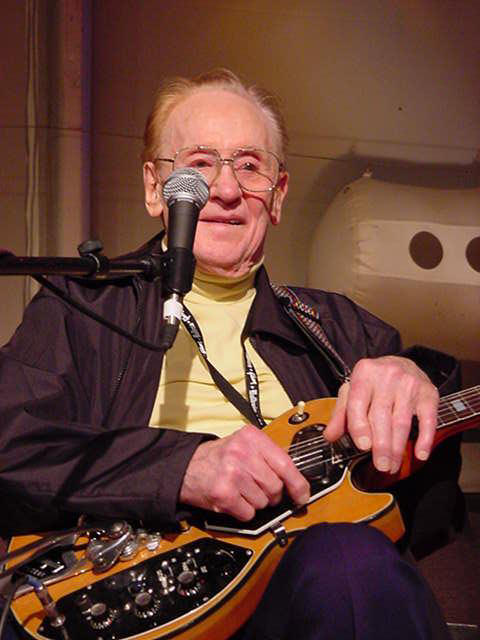
foi preciso o Solomon Burke morrer para dar com o álbum dele Don't Give Up on Me, se ainda não ouviram dêem uma escutadela, é das melhores coisas que ouvi.
RIP King Solomon
Ps: meter a fast train a seguir à don't give up on me é de génio.
Well you've been on a fast train and it's going off the rails And you can't come back can't come back together again And you start breaking down In the pouring rain Well you've been on a fast train
When your lover has gone away don't it make you feet so sad And you go on a journey way into the land And you start breaking down 'Cos you're under the strain And you jump on a fast train
You had to go on the lam you stepped into no-man's land Ain't nobody here on your waveband Ain't nobody gonna give you a helping hand And you start breaking down And just go into the sound When you hear that fast train
And you keep moving on to the sound of the wheels And deep inside your heart you really know oh, just how it feels And you start breaking down and go into the pain Keep on moving on a fast train
You're way over the line next thing you're out of your mind And you're out of your depth in through the window she crept Oh there's nowhere to go in the sleet and the snow Just keep on moving on a fast train
You had to go on the lam stepping in no-man's land Ain't nobody here on your waveband Nobody even gonna lend you a helping hand Oh and you're so alone can you really make it on your own Keep on moving on a fast train
Oh going nowhere, except on a fast train Oh trying to get away from the past Oh keep on moving keep on moving on a fast train Going nowhere across the desert sand through the barren waste On a fast train going nowhere On a fast train going nowhere
Warren Zevon a tocar My shit's fucked up no David Letterman's Late Night
Ambos tiveram poucas hipóteses de lutar contra o cancro mas ambos enfrentaram-o com valentia e até um certo bom humor, a comprovar estão alguns excertos de ambos:
"Se há coisa que eu costumo dizer, é : aproveitem a vida e ajudem-se uns aos outros. apreciem cada momento. agradeçam e não deixem nada por dizer, nada por fazer..." António Feio
"Foi surpreendente o sketch de Os Contemporâneos em que participou, fazendo paródia da sua própria doença.
Brinco muito comigo. Brinco com tudo. Até com isso se pode brincar. Não estou a gozar.
Se ficar com as calças rasgadas em público, é ridículo, não quero, não gosto; mas eh pá, vou ter de reinar com a situação. Relativizar. Passei a pensar de maneira diferente. Toda a gente se queixa. Ai, ai, ai, ui, ui, ui, e isto e aquilo, e que chatice, e apanhei muito trânsito, e para a semana vou ter de fazer não sei o quê. Talvez precisem de levar com uma coisa assim para abrir a pestana e perceber que não tem importância. Também penso que isto tem alguma lógica...
Lógica?
Quando se tem pouco cuidado com a saúde, é natural que surjam problemas. Fumo desde miúdo que nem um cavalo, sempre tive uma alimentação desregrada, sempre me deitei tarde."
António Feio entrevistado pelo jornal Público, retirado daqui.
Paralelamente, o Warren Zevon na entrevista com David Letterman diz:
''I might have made a tactical error in not going to a physician for 20 years''
Posteriormente, quando Letterman lhe pergunta em que medida esta sua condição lhe tinha ensinado algo sobre a vida e a morte, Zevon responde: ''How much you're supposed to enjoy every sandwich".
bom, tudo isto para agradecer a estes dois Senhores pela sua existência e que descansem em Paz. Os seus conselhos são seguidos à risca por cá. Ou pelo menos faz-se por isso.
Paul Westerberg and the Replacements spoke for countless artists and diehard fans when they wrote a song called "Alex Chilton" in 1987.
"Children by the millions sing for Alex Chilton when he comes 'round/They sing, 'I'm in love, what's that song?/ I'm in love with that song.' "
Chilton, who died Thursday in New Orleans of a heart attack at age 59, was a cult artist for most of his career, better knonw for the bands and artists he inspired, including R.E.M., Wilco, Jeff Buckley and the Replacements, than his own music. Yet his legacy endures, most especially the three studio albums he recorded with his group Big Star in Memphis during the '70s. Big Star was a group ahead of its time, its merger of British Invasion-style guitar melody and Southern soul a template for what would become known as "power pop." But it was virtually unheard in its time; the third Big Star album, "Sister Lovers," was released long after Chilton had walked away from the group utterly discouraged by its lack of success.
Yet Big Star's music only grew in stature as the decades passed, and songs such as "September Gurls" and "In the Street" were covered by numerous artists. The band's music was recently repackaged in a lavish box set, and was to be the subject of a major panel at the South by Southwest Music Conference in Austin, Texas, on Saturday, followed by a concert in which original members Chilton and JOdy Stephens were scheduled to perform.
From the start, Chilton cut a contrary figure, charting an artistic course that indulged deeply personal idiosyncrasies rather than courting universal appeal. This was apparent the moment the 16-year-old Chilton first stepped inside a Memphis recording studio in 1966 for a rehearsal with his first major band, the Box Tops. He was wearing jeans with holes torn in the knees, a black T-shirt and a woolen scarf tossed Dylan-style around his neck. The studio regulars, in their dress shirts and penny loafers, were appalled. But when Chilton re-entered that same studio a few weeks later for his first recording session, he would emerge with a hit: His impossibly soulful reading of Wayne Thompson's "The Letter" became one of the biggest singles of 1967, the first of seven top 40 hits for the Box Tops, and the beginning of what would become one of the most brilliant, enigmatic and maddening careers in rock history. Chilton would walk away from the Box Tops, disgusted by record-company machinations that would bedevil him the rest of his career. He joined the brilliant songwriter Chris Bell, bassist Andy Hummel and drummer Jody Stephens in Big Star, only to be disappointed again, this time by the public's indifference. Glimpses of Chilton's fractured brilliance continued to poke through as he pursued a solo career; the haphazard, frazzled energy of the "Like Flies on Sherbert" album captured the tenor of the late '70s more effectively than dozens of better-known punk records, and Chilton also made his mark as a producer, working on the early records of the notorious psychobilly band the Cramps. It wasn't until the mid-'80s that Chilton returned to making records, and his music took another turn; it was more relaxed and bluesy, about evenly split between covers and original songs, with a generally lighter feel than much of his crucial '70s work. He reunited with Stephens to record a new Big Star album in 2005, but otherwise confined himself to live performing. In a 1995 interview with the Tribune, Chilton claimed that Big Star's music meant little to him. "In general, I think it's overrated," he said. "There are only a few songs that I can stand to play anymore." That comment was typical of Chilton in its contrariness. His solo career was marked by inconsistency, and sporadic reunions with Big Star and the Box Tops. "He's been popular, his music is pervasive, and yet he's virtually unknown," Memphis music journalist Robert Gordon once told the Tribune. "He's a magnificent obscurity." - By Greg Kot (Chicago Tribume)
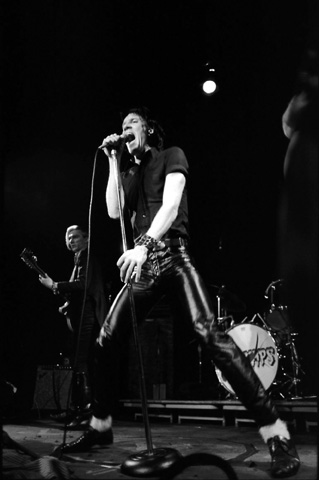
Olha que merda... há semanas atrás foi o Ron Asheton dos The Stooges e ontem foi a vez do Lux Interior (dos Cramps) despedir-se deste mundo. Mais um dos heróis fundamentais do rock'n'roll que se vai, para a história ficam os álbuns editados e os milhares de concertos tocados um pouco por todo o lado. Uma grande perda. RIP
Ps: há pessoas que tomam drogas, sejam elas legais ou ilegais, outras refugiam-se noutros subterfúgios, eu sei que quando me sinto em baixo, pego no i-pod, ponho a the way i walk dos Cramps e sinto-me quase instantaneamente como o maior do mundo. Obrigado por isso e pelo resto!
Figura importante no panorama musical Português, João Aguardela faleceu ontem em Lisboa, tinha 39 anos. Deixou um legado de boa música e de uma figura sempre há procura de novos sons e alquimias.